


Community-Driven Stevia Industry in Kudat
nabalunews
Jan 28
3 min read
28 January 2026
PENAMPANG: Stevia (Stevia rebaudiana), a natural, low-calorie sweetener from the sunflower family, is gaining recognition in Malaysia. Native to Paraguay, it has been used for centuries to sweeten drinks and thrives in various environments across South America. Its sweet compounds, steviol glycosides, are many times sweeter than sugar but contain minimal calories.
In recent decades, stevia has spread to countries in the Pacific Rim, where it is cultivated for its leaves and processed into natural sugar substitutes. Introduced to Malaysia around 2008, farmers initially grew it as a hobby, but interest is now growing in its commercial potential. As awareness of sugar-related health issues rises, stevia's popularity is expected to increase, offering a sustainable crop for farmers.
In Sabah, stevia has become popular for its health benefits. A community of entrepreneurs is now producing stevia-based products, turning it into valuable goods and opening new business opportunities.

For Zaharinah Masair, the proprietor of LZ Industry Sdn Bhd, the journey to produce products from the stevia plant began when local farmers and communities, particularly in regions like Kundasang and Keningau, inquired about ways to utilise their stevia leaves. Initially, farmers asked what to do with the leaves and if they could be processed for use.
Zaharinah said they began by experimenting with processing fresh leaves into powder, but they found this was not very viable as the leaves could wilt during transit. So, she advised them to ensure the product’s longevity by drying and grinding the leaves into powder before sending them to her processing plant. This approach not only added value to what was previously waste but also opened avenues for small-scale production and market expansion.
“The local community plays a vital role in this ecosystem. Farmers harvest and dry the leaves using their equipment, such as grinders, and then send the processed material to our processing facility. We handle the extraction, formulation, and packaging of stevia products. The process is a collaborative effort: farmers supply the raw materials, and processors add value through careful processing, quality control, and branding,” she shared.

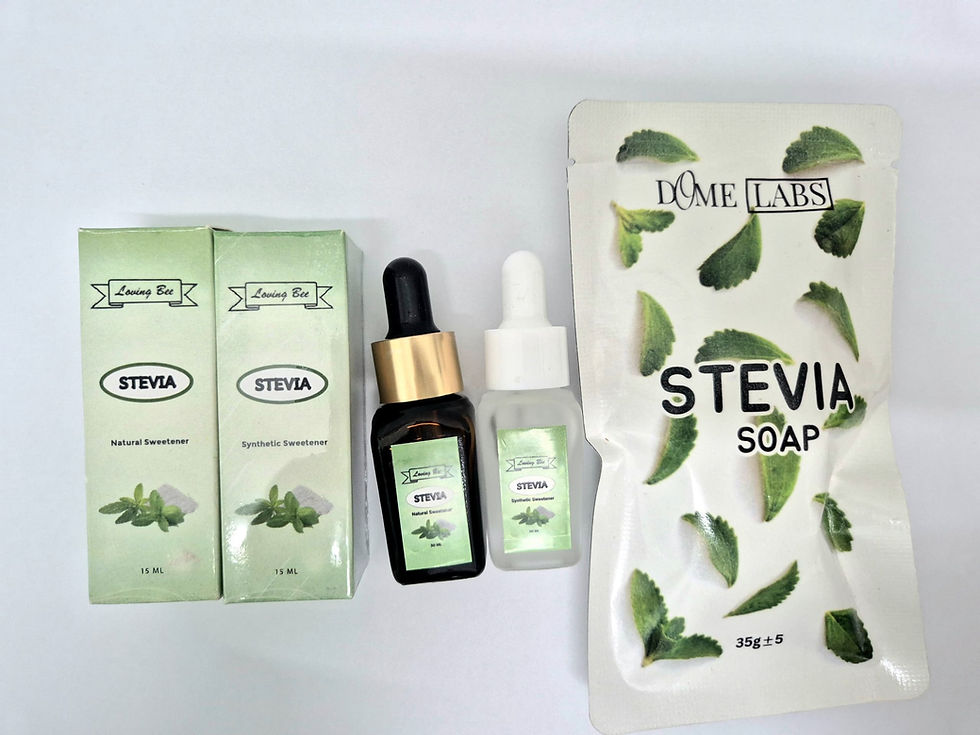
“We have developed multiple formulations to cater to different consumer preferences. For example, some products are formulated to be sweeter, with adjustments made according to customer demand. The company offers both synthetic and natural versions: synthetic with preservatives for durability, and natural, preservative-free options that are less stable but more organic.”
“Quality control is strict; processed products undergo stability testing over two weeks to ensure they are free from microorganisms before being marketed. This attention to quality has earned positive feedback from consumers, especially regarding the products’ safety and health benefits.”
After the stabilising period, the products are packed are sent back to the suppliers to sell, which meant, the company process everything from start right up to the packaging for their clients.
To date, her company has produced soap, sweetening agent, and lip gloss from stevia plants, and Zaharinah said there will be more products, with ongoing research and development on the plants and their derivatives.
“We have held exhibitions in neighbouring countries such as China, Korea, Vietnam, Singapore, Brunei, and Hong Kong. It is not difficult to promote and sell, as stevia is very well known for its health benefits, such as being a substitute for sugar for diabetics or for those wishing to maintain a diet,” she added. The products are marketed both online and through international trade shows, with some orders coming from overseas customers who appreciate the natural and health-conscious qualities of stevia-based products.
While many producers sell under their own brands, some brands are developed by the processing company itself. One such brand is "Loving Miss Tivia," which has gained recognition in local markets. The products are primarily marketed within Malaysia, with plans to expand further through export channels.
She shared that exhibitions and trade shows have proven effective in showcasing these products, with entrepreneurs receiving positive responses from both local and international visitors. The majority of feedback indicates that consumers are eager for natural, healthy alternatives, and they appreciate transparency regarding ingredients and sourcing.
The community’s involvement in stevia production is expected to grow further, she said, adding that although there are currently only two sources of stevia, Kundasang and Keningau, she believes more farmers can participate in the supply chain. With ongoing research and development, new formulations are being created to enhance sweetness and shelf life, catering to diverse consumer needs.
She expressed her happiness with community involvement and hopes to contribute more to the community.
LZ Industry Sdn Bhd is sited in Kudat, where the establishment produces many other items including perfume, soaps and other beauty products.



Comments