


25 Chinese community associations in Penampang receive RM155,000 in contributions from the Penampang MP

22 December 2025
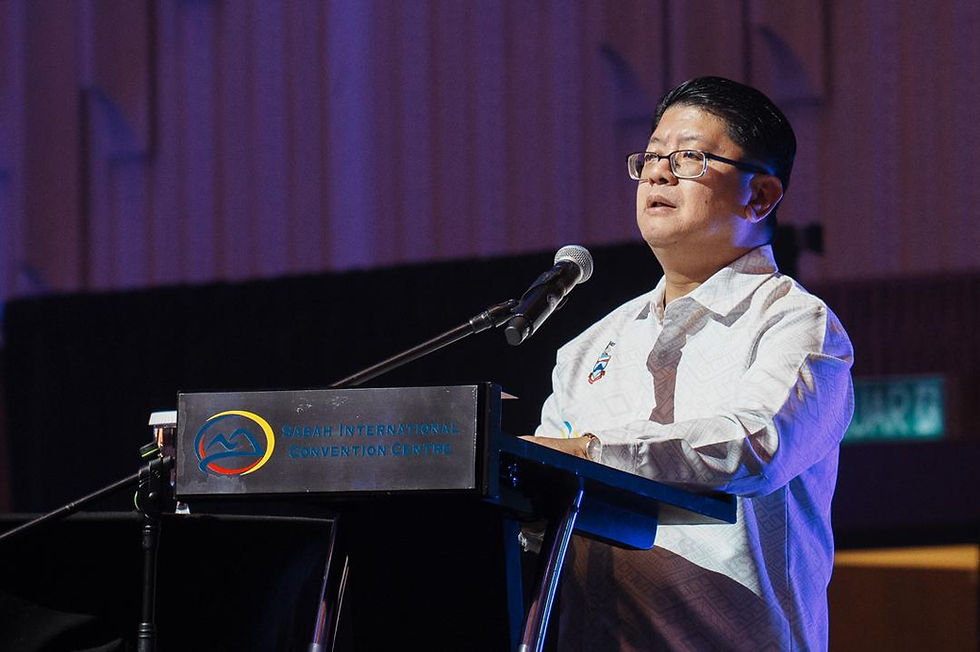
PENAMPANG: The Member of Parliament for Penampang, Datuk Ewon Benedick, presented contributions totalling RM155,000 to 25 Chinese community associations in the parliamentary constituency, as part of his continued commitment to supporting community development and local industry players.
Ewon, who is also Sabah’s Deputy Chief Minister III and Minister of Industrial Development, Entrepreneurship and Transport, said the initiative stemmed from discussions with the Chinese Kapitans of Penampang, who had previously organised the Chinese New Year celebrations and the Penampang Parliamentary Lantern Festival.
“As the Member of Parliament for Penampang, I have channelled a total allocation of RM155,000 to 25 Chinese community associations in the Penampang constituency. Six associations each received RM10,000, while the remaining 19 associations received RM5,000 each.
“I am confident that through close cooperation with associations and industry players, we can elevate economic, industrial, business and entrepreneurial development in Sabah,” he said in his speech at the Thanksgiving Ceremony and Presentation of Contributions to Penampang Chinese community associations here yesterday.
The event was organised by the Penampang Chinese Chamber of Commerce and Industry (PCCCI).
Ewon also shared his ministry’s policies, vision and main areas of focus, including the implementation of the Sabah First Policy, which emphasises efforts to develop the people of Sabah so that they can enjoy better opportunities and incomes through employment and business ownership.
“When I took the helm of this ministry, I stated that I would implement the Sabah First policy in this ministry.
“The meaning of the Sabah First Policy is that, in addition to supporting the Sabah Maju Jaya Plan and other development plans, I want to see the people of Sabah further developed so that they have income, whether as business owners or as employees working with business owners.
“To realise this vision, we must have a clear focus, namely to build an industrial ecosystem, an entrepreneurship ecosystem and a business–entrepreneurship ecosystem that are better than before,” he said.
He added that this was also important in reducing poverty levels in Sabah, noting that eight out of the 10 poorest districts in Malaysia are located in the state.
“Therefore, I have made the vision of developing the people of Sabah so that they have income the foundation of my leadership in this ministry.
“By placing agencies related to logistics and transport under my ministry, it will make it easier for us to develop a better ecosystem.
“We need to build a stronger industrial, entrepreneurial and business ecosystem, including resolving logistics issues, port congestion, shortages of industrial parks and enhancing the capabilities of Sabah’s small and medium-sized enterprises (SMEs),” he said.
He stressed that the standards and quality of products and services offered by Sabah’s industry players must continue to be improved so that they can compete not only at the national level but also meet international market standards.
At the same time, Ewon said that services provided by the ministry, its agencies and government-linked companies (GLCs) under his purview must be more efficient and responsive to industry needs.
He also informed that he had proposed to the Chief Minister of Sabah that corporate representatives be appointed to the boards of directors of industry-related agencies and GLCs to ensure more professional governance that is based on industry needs rather than political interests.
“I believe this approach will bring significant benefits to Sabah, making the state a better destination for investment, business and entrepreneurship, while at the same time increasing business owners’ incomes and creating more job opportunities for the people,” he said.
Ewon emphasised that he would continue to work closely with the PCCCI as well as entrepreneurship-, business- and industry-based organisations to ensure that Sabah’s economic development agenda can be realised.




Comments